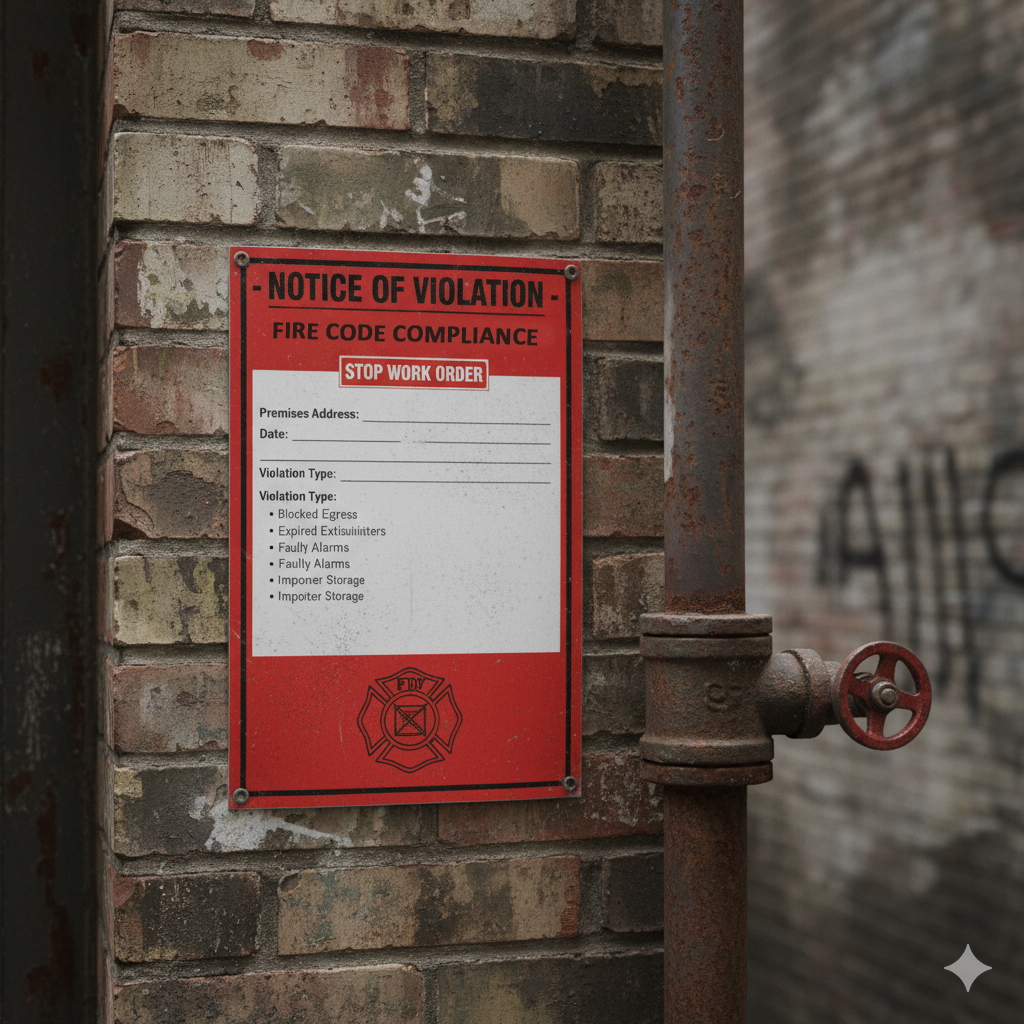
Got an FDNY violation? Whether it’s a Notice of Violation (NOV), a Violation Order for an imminent hazard, or a Vacate Order, FDNY citations can cause fines, delay sales or refinancing, and create real safety risks. This guide explains what FDNY violations are, common causes, how they impact your property, and the fastest practical steps to remove them.
What is an FDNY violation?
An FDNY violation is a formal citation issued when a property fails to comply with the New York City Fire Code or FDNY regulations. Violations range from administrative (missing permits or expired equipment) to life-safety hazards (blocked exits, non-functional fire alarms) that may require immediate correction.
Why FDNY violations matter
- Fines & legal exposure: Unresolved violations can lead to escalating penalties and administrative hearings.
- Sale or refinance impact: Open violations can block closings or slow lender approval.
- Safety & liability: Fire-safety defects increase the risk of fire or injury and can expose owners to lawsuits or insurance issues.
Common FDNY violations
- Obstructed or improperly maintained means of egress (stairwells, corridors, fire escapes)
- Non-functional or missing fire alarms and smoke detectors
- Improper storage of flammable or combustible materials
- Expired or missing fire extinguishers and lack of inspection tags
- Unsafe electrical wiring or unauthorized electrical work
- Failure to obtain required permits or Certificates of Fitness
Step-by-step: How to respond to an FDNY violation
- Read the citation carefully. Identify whether it is a Notice of Violation (NOV), Violation Order, or Vacate Order and note any cure dates.
- Assess and correct the physical condition. Fix the hazard: repair alarms, clear exits, remove flammable storage, replace extinguishers, or correct electrical issues.
- Document corrections. Take dated photos, invoices, inspection reports or service logs showing work performed.
- File the required paperwork. Submit a Certificate of Correction (or other required documentation) to FDNY or the appropriate NYC office before the cure date.
- Attend hearings if necessary. If you cannot cure in time, be prepared to attend an administrative hearing and provide evidence of good faith efforts.
- Verify closure. Confirm the violation status is updated to “closed” in public records so it no longer affects sales or financing.
Quick tips to avoid FDNY violations
- Schedule regular fire-safety audits and alarm inspections.
- Maintain clear egress paths and post emergency exit signage.
- Keep extinguisher and alarm service records handy and current.
- Train building staff on fire safety and required documentation.
- During purchases or refinancing, run a pre-closing compliance check to catch any open violations early.
How a specialist like NYC Building Violation Removal helps
Because FDNY compliance mixes technical repairs, regulatory paperwork and administrative hearings, partnering with a specialist streamlines the process:
- Proactive audits to find risk areas before they become violations
- Coordination with licensed contractors for fast repairs
- Accurate filing of Certificates of Correction and follow-up with FDNY/OATH/ECB
- Monitoring to ensure violations are properly closed in public databases
Frequently asked questions (FAQ)
How fast do I need to act?
Timeframes vary. Violation Orders and Vacate Orders often require immediate or very quick correction. NOV cure dates may give more time, but delaying increases risk of hearings and fines.
Will removing the violation remove it from my record?
Once corrected and the proper certificate or documentation is filed, the FDNY or administrative bureau updates the violation status to “closed.” We always verify the record is cleared to prevent surprises during a sale or refinance.
Can old FDNY violations be removed?
Yes — many older violations can be corrected and cleared if the underlying issue is fixed and supporting documentation is provided. The exact process depends on the violation type and tribunal involved.